
Hurom lineup · 2026 update

Hurom’s 2026 cold-press lineup: the H80, the H330, and the CP50

Mustafa, author of Juicing with Mustafa

Written by Mustafa

Sponsored post

Hurom launched three machines this year: the CP50, a commercial cold-press juicer, and two home models, the H330 and the H80. I’ve worked in the juicing world for a long time, and the questions people ask about a new lineup are always the same three. What kind of juice does it make? How much work does it add to the morning? And is the price right for what you actually juice?

So here’s the lineup put against the same criteria I use everywhere else on this site: what each machine is for, where it wins, and where it doesn’t.

The framework

The four things I compare on every juicer

  1. 01

    Juice quality

    Color, foam, texture and how much juice stays in the pulp. Those are the things I'd compare. The pressing system and strainer design are useful starting points; RPM alone doesn't tell you how good the juice will be.

  2. 02

    Ease of use

    Assembly, feeding, cleanup. If cleanup becomes a chore, the machine is less likely to stay in your routine.

  3. 03

    Versatility

    Leafy greens, hard roots like ginger and beet, soft citrus, nuts for milk. A juicer that only handles apples and carrots isn't much of a juicer, okay?

  4. 04

    Noise

    Juice at 5 a.m. with the house asleep and noise matters. Slow AC motors are the quiet ones, so check RPM and motor type.

Price, warranty and whether it fits under your cabinets are the tradeoffs layered on top. The ratings below are my editorial judgment under those criteria, not a lab score.

Primer

A quick word on cold press

A centrifugal juicer shreds the produce with a fast spinning blade. That makes heat, and it pulls in air, and both of those work against the nutrients you’re juicing for in the first place. A slow juicer presses instead of shredding. The auger squeezes the produce against a strainer at a low RPM, the way you would squeeze an orange in your hand.

Charlie Wettlaufer at Goodnature ran lab tests on this. Cold-pressed juice started with 15% more vitamin A, 16.2% more folate and 13.1% more vitamin C than centrifugal juice, and after 72 hours in the fridge the gap grew wider.

257%

more vitamin A than centrifugal juice after 72 hours in the fridge

350%

more vitamin C over the same 72 hours

The practical difference is that cold-pressed juice doesn’t separate on you, and a batch still tastes right two days later.

At a glance

The 2026 Hurom lineup, in order

  1. Hurom H80$749
    4.9 / 5

    Families, daily juicing, making a gallon at a time

  2. Hurom H330$479
    4.7 / 5

    First-time slow juicer buyers, Hurom quality under $500

  3. Hurom CP50$1,499
    4.8 / 5

    Juice bars, cafés, hotel breakfast service, gyms

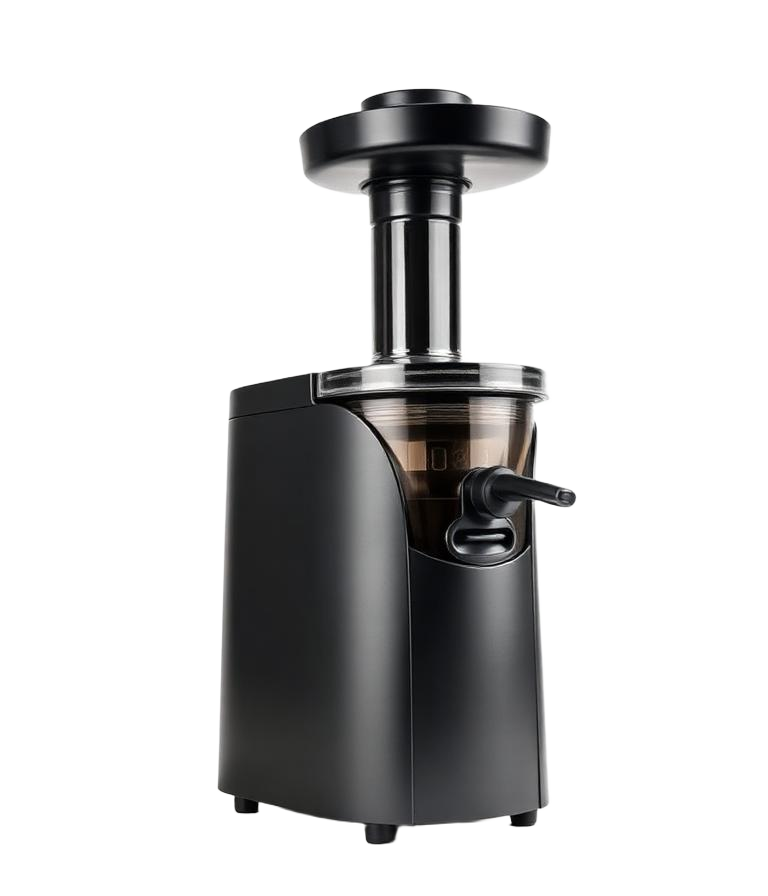
Hurom H80 Slow Juicer
1Winner

Hurom H80 Slow Juicer

4.9 / 5$749at hurom.com

Pros

  • The biggest self-feeding hopper on a Hurom home machine (2 liters), with a larger inlet so you can keep adding produce while it runs
  • New Spiral Blade in the hopper, so kale and celery don't clog or stall
  • 50 RPM slow squeeze, very dry pulp, low-pulp juice
  • Three strainers included: fine for juice, coarse for smoothies and thicker juice, ice cream for sorbet
  • Dishwasher-safe components
  • 150-watt AC motor that's quiet enough for early mornings
  • All BPA-free materials, made in South Korea
  • 15-year warranty on motor and parts
  • Refined juice pitcher with oz/ml markings and a 2-in-1 measuring and pusher tool

Cons

  • It's a $749 machine
  • Big footprint (about 18 inches tall), so measure your counter space under the cabinets
  • Large seeds like peach pits need to come out before juicing

In the last version of this guide the H400 was my winner. The H80 is the next step from that same family, and it addresses the part of slow juicing that wears people down, which is feeding.

The two-liter self-feeding hopper matters if you make juice for more than one person. It feeds the produce for you, and the inlet on top is wider than before, so you can top it up while it runs instead of stopping the machine. When you're making a gallon of green juice, that's the difference between standing at the counter and getting on with your day. It's the kind of convenience I'd put ahead of an extra attachment.

The Spiral Blade is the other new piece. Hurom put it in the hopper to keep fibrous greens moving down into the auger. Kale and celery are the two ingredients most likely to stall a slow juicer. If kale and celery are regular ingredients for you, that is a feature worth looking at.

For juice quality, I look at the strainer options as well as the pressing system. The fine strainer is for everyday juice, the coarse one for a thicker vegetable juice or smoothie base, and the ice cream strainer for softened frozen fruit. That's useful versatility if you'll actually use the extras.

Cleanup is the reason I'd point most people here. Hurom lists the components as dishwasher safe, and the Fit & Clean pulp bar clears the chamber before the parts come out. That single line changes the daily math more than any headline spec, because the machine you dread washing is the one you stop using.

The only real objection is price. If $749 is out of range, keep reading, because the H330 shares most of what makes this machine good.

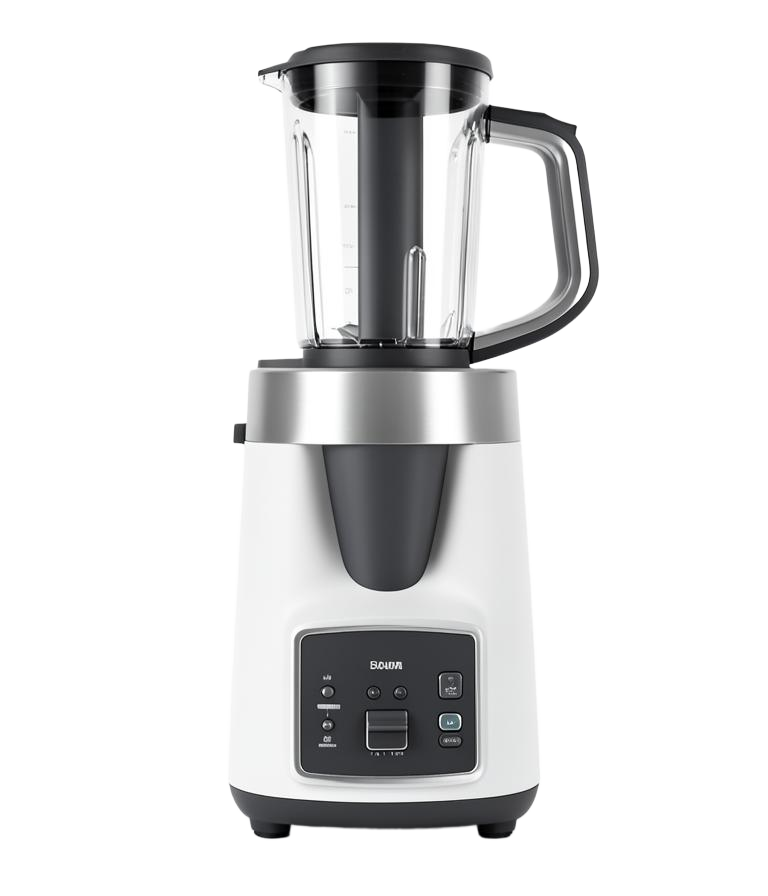
Hurom H330 Slow Juicer
2Best value

Hurom H330 Slow Juicer

4.7 / 5$479at hurom.com (regular $549)

Pros

  • Same core juicing technology as the H320, at a lower price
  • Self-feeding 2-liter hopper
  • 50 RPM slow squeeze, low-pulp juice, dry pulp
  • Coarse strainer included in the box, alongside the fine strainer
  • Paint-free body and eco-friendly packaging
  • Quiet AC motor
  • BPA-free, made in South Korea
  • 15-year warranty on motor and parts

Cons

  • No ice cream strainer in the box
  • No Spiral Blade, so cut celery and leafy greens a bit smaller
  • Heavier than it looks (16 pounds)

The H330 has been selling in Europe for a while and only reached the United States in August 2026. Hurom builds it on the same core technology as the H320, one of the machines I've recommended most often over the years, and it's advertised at $479 against a $549 regular price.

You get the self-feeding hopper, a 500 ml chamber and the same 50 RPM squeeze Hurom uses on the H80. Those are shared specs rather than a promise of identical internals, so I'd read them as the H330 being built on the same slow-press approach. Where the H80 clearly pulls ahead is the Spiral Blade, the ice cream strainer, and how much produce you can push through without touching it.

The paint-free body is a nice detail. Fewer chemicals in the build, a cleaner look on the counter, and nothing to chip because there's no coating. The box is smaller and made with less material too, which matters to me more than it used to.

If you're buying your first slow juicer and you're not sure you'll stick with it, start here. It makes real cold-pressed juice, cleanup is a rinse and the brush rather than a project, and Hurom covers the motor and parts for 15 years.

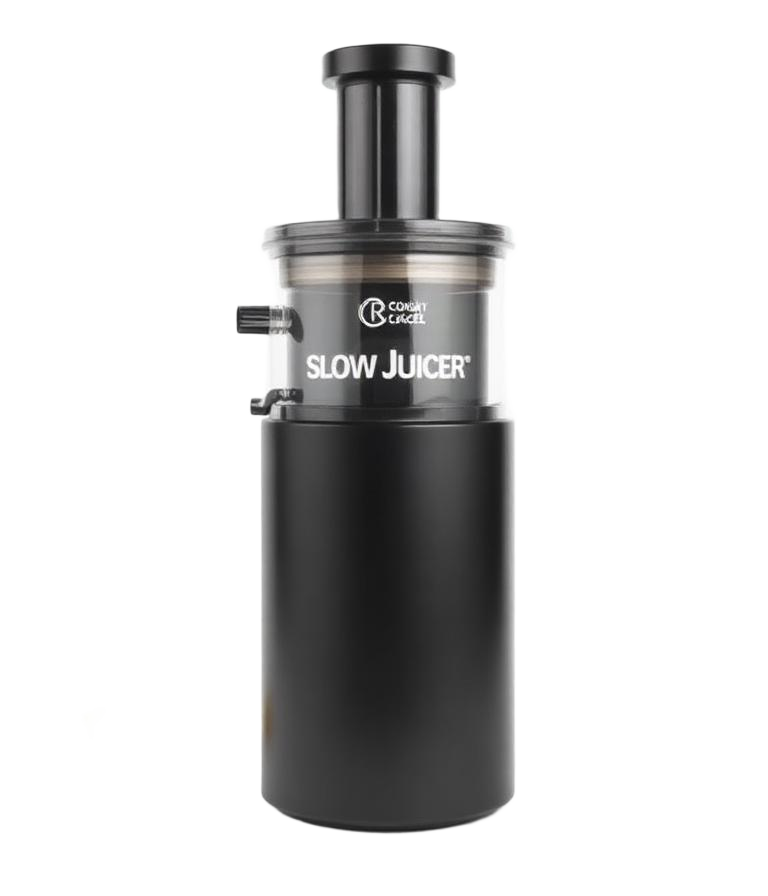
Hurom CP50 Commercial Slow Juicer
3For restaurants, cafés and juice bars

Hurom CP50 Commercial Slow Juicer

4.8 / 5$1,499at hurom.com

Pros

  • A commercial cold-press juicer built for continuous service, not a scaled-up home machine
  • 3-liter self-feeding hopper and 800 ml chamber for volume juicing
  • Extra-wide feed chute for whole ingredients
  • Dual Press Switch: swap between the Pure Line strainer (ultra low pulp) and the Easy Line strainer (faster cleaning) without replacing the chamber
  • Four preset run times (2, 3, 4 and 5 minutes) plus custom settings
  • Auto-Pilot+ manages the feed to prevent blockages
  • Quick Rinse button cleans the strainer and chamber between batches, no disassembly
  • 65 RPM slow squeeze that still keeps heat and oxidation down
  • Runs up to 30 minutes continuously without overheating
  • BPA-free Tritan build

Cons

  • $1,499 is a business purchase, not a kitchen one
  • 4-year warranty (versus 15 on the home models)
  • Easy Line strainer sold separately
  • 22 pounds and 20 inches tall, so it needs a dedicated station

This is Hurom's commercial cold-press machine, and it's the one that generated the most conversation in the trade this year. Buying for a business changes the four criteria: juice quality still matters, but throughput, workflow between orders and warranty coverage move to the front.

Start with throughput. The 3-liter hopper and 800 ml chamber, plus a chute wide enough for whole ingredients, mean prep time drops before the machine even starts. Four preset run times (2, 3, 4 and 5 minutes) let someone load it, press a button and go plate something, and Auto-Pilot+ is designed to manage the feed so it doesn't jam mid-run. Rated for 30 minutes of continuous operation, it's built for a service window rather than a morning glass.

The workflow feature to evaluate is the Dual Press Switch. Most commercial slow juicers make you choose: a fine mesh strainer for clear, low-pulp juice that's slow to clean, or an easy-clean strainer that leaves more pulp in the glass. On the CP50 you swap the strainer inside while the hopper and chamber stay in place. Pure Line for the cold-pressed menu, Easy Line when you're slammed and need to turn batches fast. If your menu spans both, that's a real answer to a real problem.

Cleaning between orders is the other thing I'd weigh. Make a green juice, then take an order for orange, carrot and beet, and you can't send green residue out in the cup. The Quick Rinse button flushes the strainer and chamber with water without disassembly, which is the difference between a machine that keeps up on a line and one that doesn't.

At 65 RPM it runs faster than the home models, which is the tradeoff for volume, but it's still in slow-juicer territory rather than centrifugal. Then look hard at the warranty: four years, against fifteen on the home machines. For a machine running all day in a business, I'd want to understand exactly what that four years covers, and price a service plan in from the start.

If you're buying for a home kitchen, you don't need this. If you're selling juice, the case rests on how many batches a day you turn and what your labor costs to run them.

Specs

Side by side

Swipe the table to compare →

SpecHurom H80Hurom H330Hurom CP50
Price$749$479 (reg. $549)$1,499
Best forDaily and family juicingFirst slow juicer, valueCafés, juice bars, restaurants
Auger speed50 RPM50 RPM65 RPM
Hopper2 L, self-feeding, Spiral Blade2 L, self-feeding3 L, self-feeding, Auto-Pilot+
Chamber500 ml500 ml800 ml
Strainers includedFine, coarse, ice creamFine, coarsePure Line (Easy Line sold separately)
CleanupDishwasher-safe parts, Fit & Clean pulp barRinse, cleaning brush includedQuick Rinse button, no disassembly
Motor150 W AC, quiet150 W AC, quiet150 W AC, 30 min continuous
Warranty15 years15 years4 years
Weight13.7 lb16 lb22 lb
Height18.0 in18.2 in20.3 in

Verdict

Which one should you buy?

  • Buy the H80 if you juice most days, you're feeding more than one person, or you've owned a slow juicer before and you know the feeding step is what wears you down. It's the strongest home machine in Hurom's lineup and the one I'd recommend first today.

    $749
  • Buy the H330 if this is your first slow juicer, or if the H80's price is the only thing stopping you. You give up the Spiral Blade and the sorbet strainer, and you keep the juice.

    $479
  • Consider the CP50 if somebody is paying you for the juice, and price it against your daily volume and labor.

    $1,499

Last word

Where to buy

Ready to start? Every machine in this guide is available at hurom.com, and readers here get 10% off with code HEALTH10 at checkout.

Want the wider field? Read the full 2026 cold-press juicer guide or the best machines under $500.

Top pick

Hurom H80 · $749

See it